Cardboard boxes are essential for packaging everything—from e-commerce orders to industrial goods. But how much does it cost to manufacture a cardboard box in 2025? Whether you’re a startup, a packaging supplier, or just curious about the economics of box production, understanding the real cost is key.
In this guide, we’ll explore:
Production costs per unit and per ton
Profit margins for manufacturers
Where companies buy cardboard in bulk
How much businesses pay for packaging
Let’s unpack the cost structure of cardboard box manufacturing in simple terms.
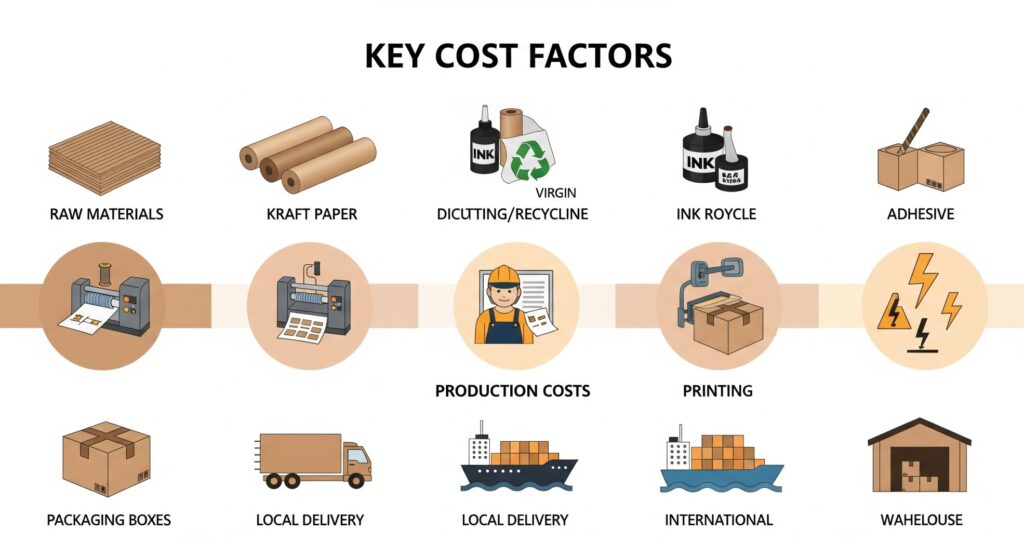
What Factors Affect the Cost of Manufacturing a Cardboard Box?
Manufacturing a cardboard box involves several cost elements:
Raw Materials:
Corrugated cardboard sheets
Kraft paper (virgin or recycled)
Ink for printing (if custom printed)
Adhesives (for sealing flaps or laminates)
Production Costs:
Die cutting and box folding
Printing setup (for branded boxes)
Labor and energy costs
Machinery maintenance
Logistics:
Packaging for shipping
Local or international delivery charges
Storage and warehousing
Average base cost per standard box: ₹6 – ₹20 in India (non-printed, 3-ply box)
Is Making Cardboard Boxes Profitable?
Yes, cardboard box manufacturing can be very profitable, especially when done at scale. Here’s why:
Profit Drivers:
Low cost of recycled raw materials
High demand from e-commerce, retail, FMCG, and logistics sectors
Opportunity for customization and premium pricing
Average Profit Margins:
Small manufacturers: 15–25%
Large-scale operations: 30–40% (especially with B2B orders)
Tip: Offering custom packaging (e.g., printed boxes or eco-friendly variants) significantly boosts profit margins.
How Much Is a Ton of Cardboard Worth?
The price of cardboard fluctuates based on:
Global paper rates
Recycling supply chain
Demand in packaging and export industries
Approximate 2025 Rates (India):
Raw kraft paper (per ton): ₹22,000 – ₹30,000
Corrugated board (3-ply per ton): ₹35,000 – ₹45,000
Recycled cardboard (scrap): ₹8 – ₹15 per kg
Recycling centers and scrap dealers often sell cardboard at lower prices, making it a viable option for small-scale units.
How Much Do Companies Pay for Cardboard Boxes?
Different industries pay different rates based on:
Box type (3-ply, 5-ply, printed, laminated)
Quantity (bulk or retail)
Customization and size
Price Ranges:
Standard 3-ply box (unprinted): ₹6 – ₹15 per unit
5-ply heavy-duty box: ₹12 – ₹30 per unit
Custom printed box (color branding): ₹18 – ₹60 per unit
Large B2B orders (10,000+ units) often get discounted prices.
Where Can I Get Tons of Cardboard?
If you’re a packaging boxes manufacturer or reseller, you’ll need a steady source of raw or recycled cardboard.
Top Sources
Paper mills (e.g., West Bengal, Gujarat, Tamil Nadu)
Recycling plants and waste management companies
Online B2B platforms like IndiaMART, TradeIndia, Alibaba
Wholesale packaging suppliers
In India:
West Bengal is a rising hub for corrugated box manufacturing, offering competitive pricing and strong logistics.
How Much Do Companies Pay for Packaging Overall?
Packaging cost is a crucial part of the product’s final pricing.
Cost as a % of Product Price:
For FMCG: 5–10%
For Electronics: 3–6%
For E-commerce retail: 10–15%
Example:
A skincare brand selling ₹500 face cream might spend ₹50–₹70 on packaging (box + insert + printing).
Tips to Save on Cardboard Box Manufacturing Costs
Buy raw material in bulk
Use standard die sizes (to avoid tooling costs)
Choose 3-ply for lightweight products
Partner with local recyclers
Optimize storage and logistics routes
Frequently Asked Questions (FAQs)
How much does it cost to produce a cardboard box?
On average, ₹6 to ₹20 per box for standard 3-ply non-printed boxes in India.
Is it cheaper to buy or manufacture boxes?
If you have the setup and bulk demand, manufacturing is cheaper long-term. For small quantities, buying wholesale is better.
What is the most cost-effective cardboard for packaging?
Recycled 3-ply corrugated sheets offer a good balance of strength and cost.
Can I start a cardboard box business from home?
Yes, many small-scale units start with manual machines or semi-automatic setups. Space, labor, and local sourcing are key.